Over 40 ABG 8820 pavers deployed for the urgent overhaul of Beijing's East Fourth Ring Road
BEIJING – A historic road project in 2009 led to an even more astounding undertaking in China recently.
Back in 2009, a dozen ABG 8820 pavers overhauled a 12-km stretch of Chang’an Avenue in Beijing. The project was key to the 60th anniversary of the founding of the People’s Republic of China. Work had to be completed before National Day.
Pre-construction complications arose, but the deadline never changed. Ultimately, the time pressure fell on the crews and equipment. Productivity and performance were key, as was reliability.
The roadbuilding utilized 12 ABG pavers to meet the demands. The ABG 8820 pavers were equipped with double-tamper, high-density hydraulic screeds that provided quality and stability. The screeds also provided pre-compaction that reduced the number of roller passes needed, a nice time-saver.
The deadline was met, and the equipment earned high praise from both the client and the construction team. Others in the industry in Beijing took notice. That successful jobsite, back in 2009, laid a solid foundation for the subsequent adoption of ABG 8820 pavers in multiple major renovation projects.
That continues to this day – including another job with high demands and enormous productivity.
Another historic project
The Beijing Fourth Ring Road, spanning 65.3 km, is one of the busiest urban expressways in the capital. It bears immense traffic pressure and connects eight highways, including the Beijing-Harbin and Beijing-Shanghai Expressways, as well as dozens of major urban roads.
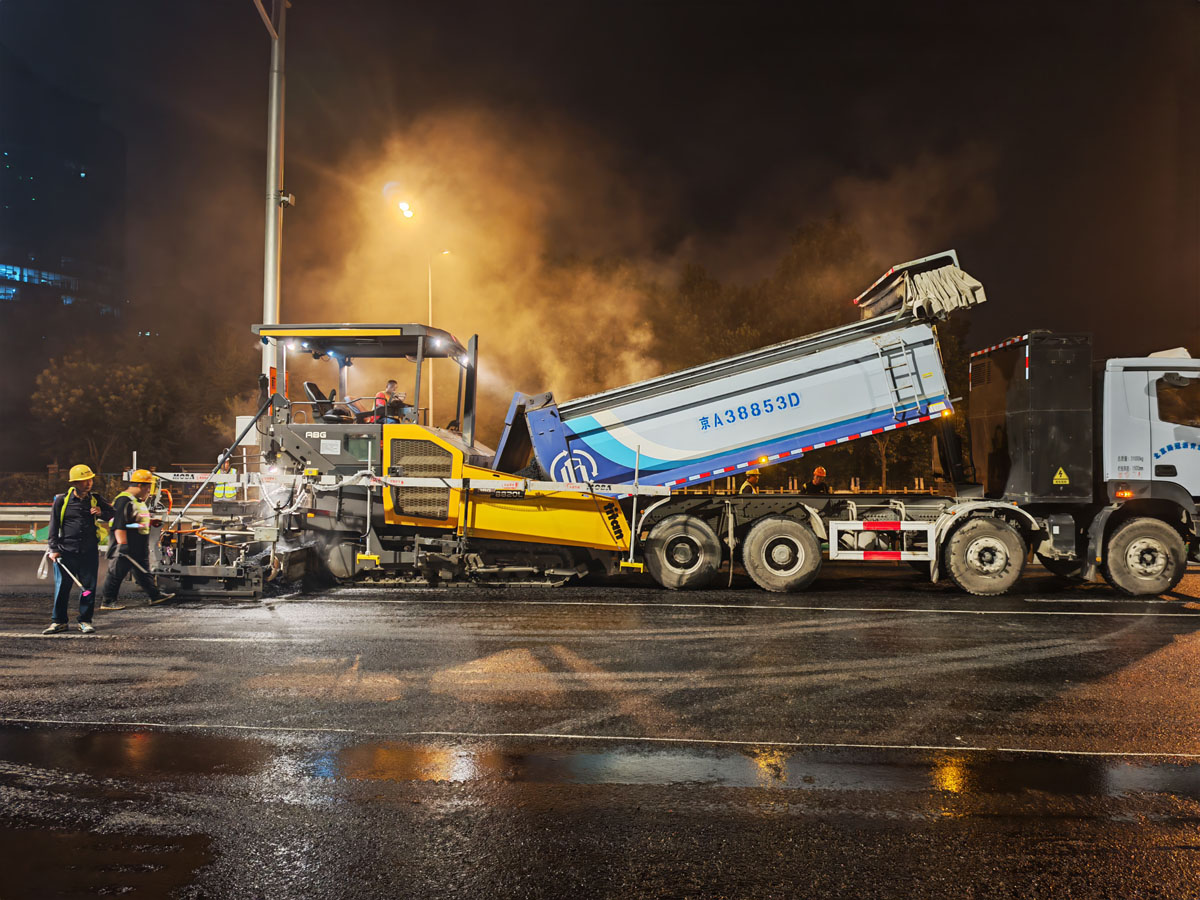
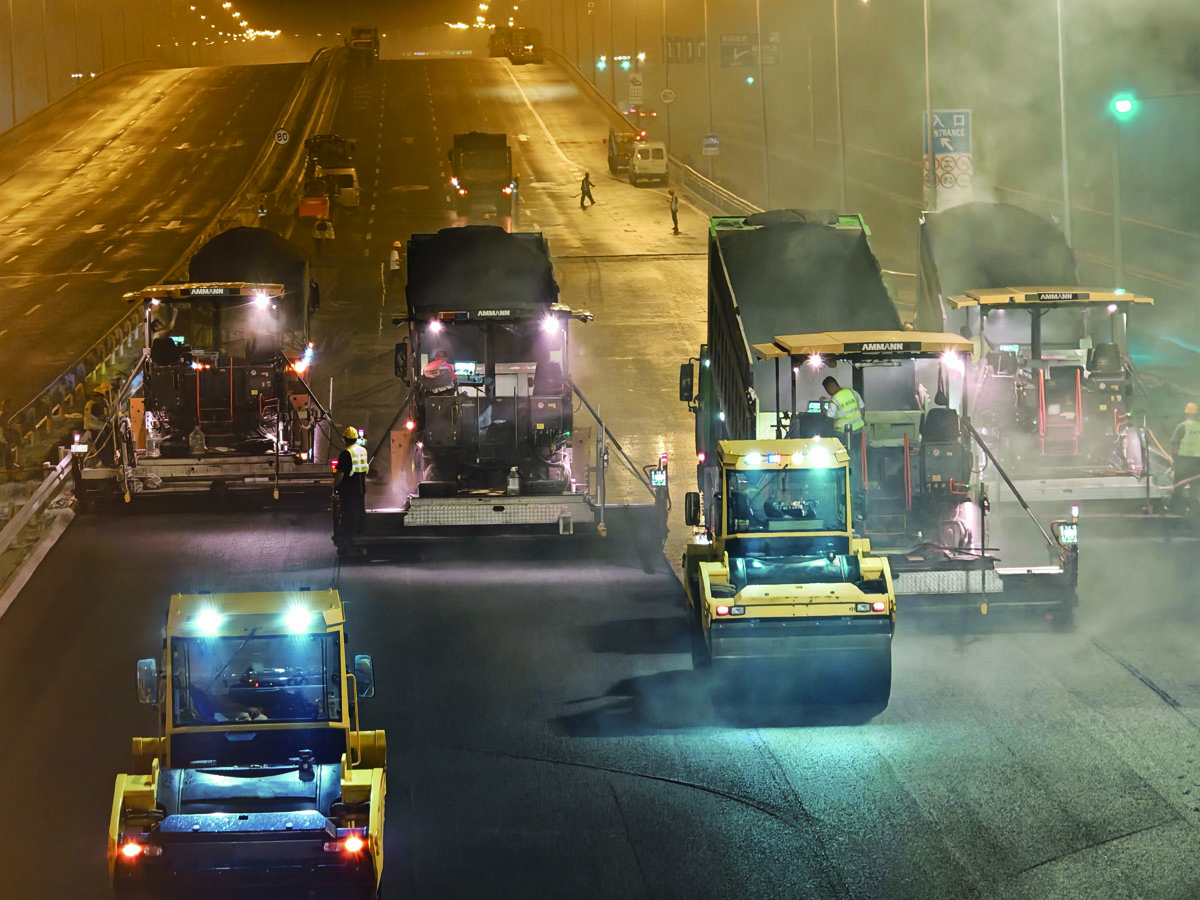
So essential is the road and associated highways that work had to be completed quickly. That led project planners to coordinate the use of 40 ABG Pavers – a record number in China and likely the rest of the world, too.
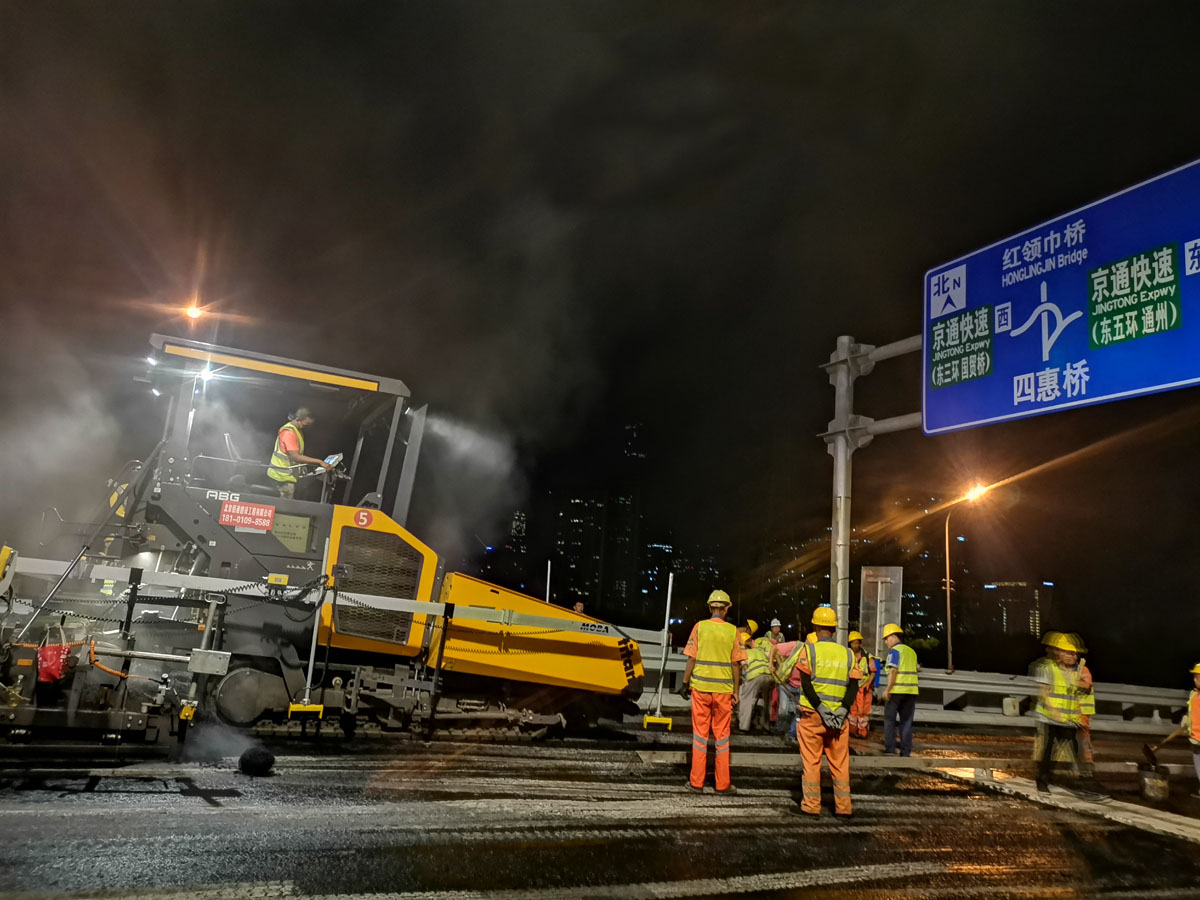
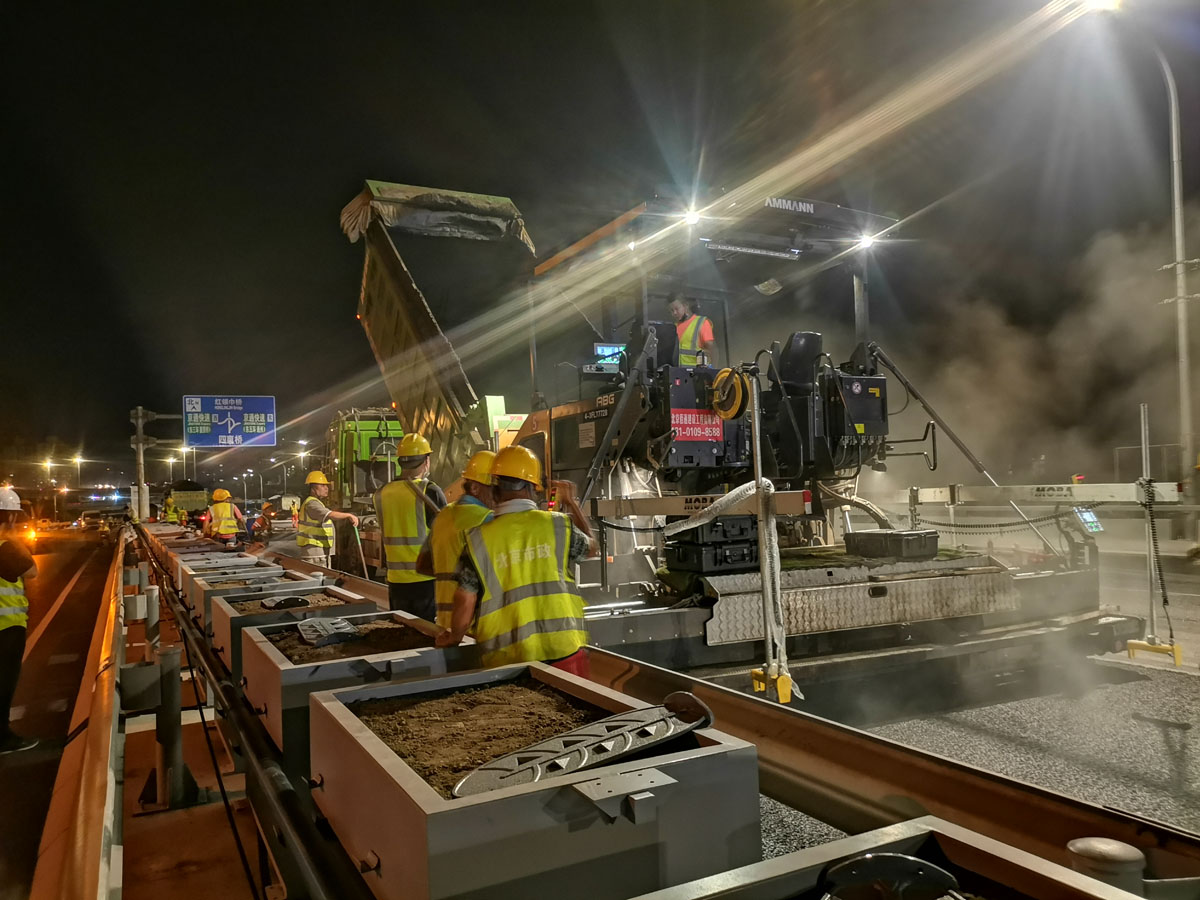
The Beijing Municipal Road Maintenance and Management Center organized construction teams to carry out the comprehensive repair of the asphalt pavement from March to July 2025. The work took place on the eastern section of the Fourth Ring Road – from the south of Siyuan Bridge to the west of Shiyaliudian Bridge. The work occurred at night, with the road open to traffic during the day.
The main section of the Dongsi Fourth Ring Road, which spans 15.56 km, had not experienced a major renovation in 20 years. The road exhibited cracking, rutting and damaged bridge expansion joints. Some sections showed a damage rate as high as 12%.
The Beijing road center addressed the engineering challenges and adopted a major repair plan. It called for complete milling of the original pavement, followed by the placement of high-elastic modified asphalt.
The primary tasks during the pre-construction phase included utility relocation and upgrading the intelligent transportation system. This involved:
Installing IoT sensors to monitor road temperature, load and cracks in real time.
Adding 5G-V2X roadside devices to enable autonomous vehicles to access traffic light and congestion information.
Installing smart poles that integrate lighting, traffic monitoring and weather monitoring functions.
A limited construction window
The heavy workload and pre-construction difficulty led to delays in the main project. It wasn't until late June that road construction officially began. Construction was scheduled during late-night hours to minimize the impact and ensure traffic flow. Temporary lane markings were applied before the road re-opened for the day.
The limited construction window meant the pavers had to deliver a peak performance. Operational efficiency, paving quality, stability and reliability were all essential.
In this context, the ABG 8820 was entrusted with a critical role – but the number of pavers went well beyond the dozen utilized back in 2009.
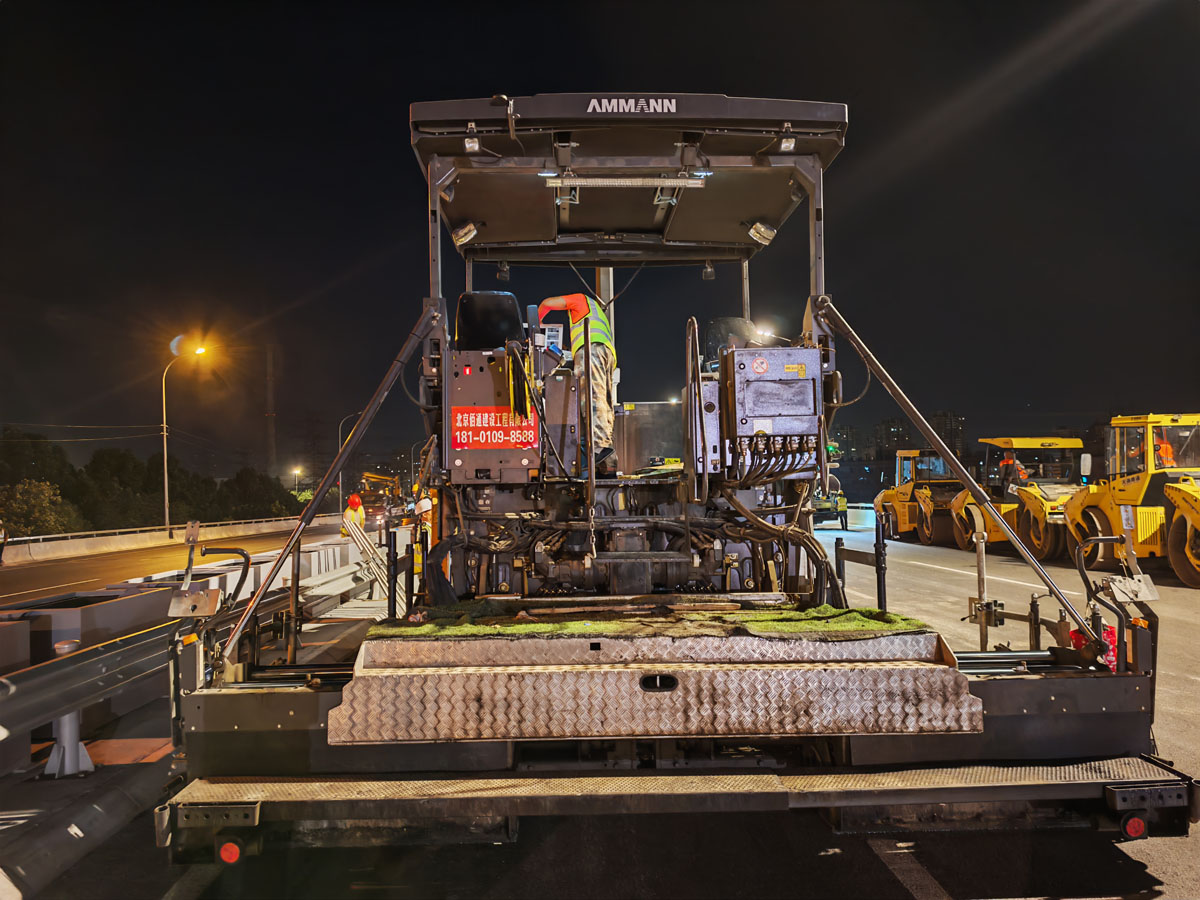
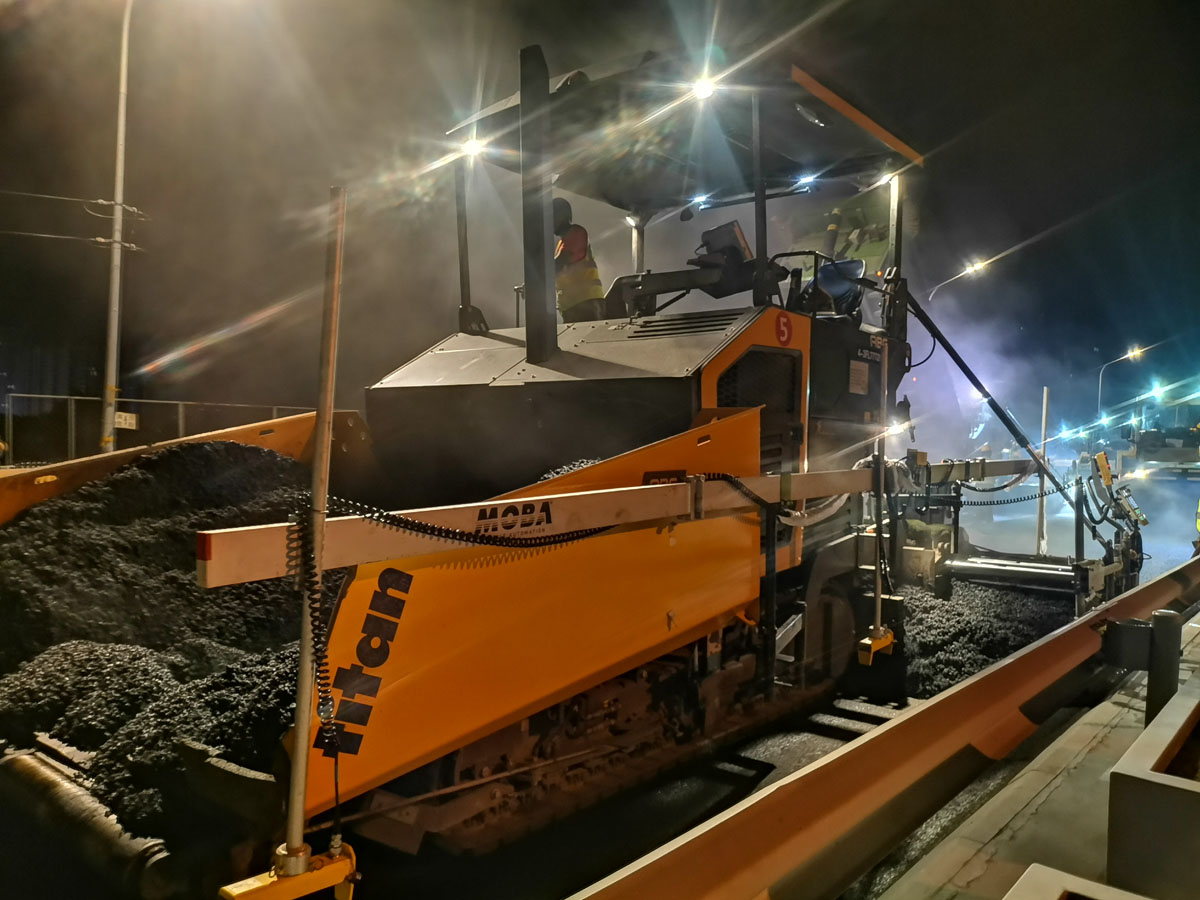
An astonishing 40 ABG 8820 pavers were deployed for the Dongsi Fourth Ring Road renovation project. Such large-scale concentrated application clearly demonstrates the full confidence of the client and construction company in ABG equipment.
This trust stems from ABG 8820's leading position in multiple key technologies and its "service-oriented" philosophy.
The double-tamper screed can achieve an initial compaction of over 90%, which improved quality and dramatically reduced the number of roller passes needed. This resulted in savings on fuel, emissions and labor.
The inclusion of a unique screed-loading device, tension adjustment, screed lock and anti-climb lock improved the smoothness and uniformity of layers.
The key components of the ABG 8820 paver (engine, hydraulic pump, hydraulic motor, hydraulic control valve, etc.) are all from internationally renowned brands, ensuring the equipment's reliability and stability.
The third-generation Electronic Paving Management System (EPM3) is simple and easy to learn, fully unleashing the potential of the equipment’s intelligent design. The main control unit (MCU) and two side control units (SCUs) share information and can control one another. The standard emergency operation mode ensures that if any one control panel fails, the other three panels will take over all functions and seamlessly continue paving operations.
Upon delivery of the ABG paver, Ammann’s professional after-sales team provided operators with a comprehensive training program. This helped them quickly master the machine’s capabilities and key operating procedures. With a long-standing reputation for durability and low maintenance costs, the ABG 8820 is a worry-free and efficient choice for construction companies.
The Beijing Fourth Ring Road renovation is not merely an infrastructure upgrade but a tangible implementation of the concept of high-quality development. The Beijing Municipal Road Maintenance and Management Center has taken a comprehensive approach – focusing on materials, technology and management – to actively promote green construction.
As a core component of this project, the ABG 8820 is writing a new chapter in the upgrading of the urban road network.